
Can You Make One Figurine From Separate Photos of Different People?
Yes, separate photos of different people can be combined into one group figurine. Use this checklist for faces, heights, outfits, poses, arrangement, and base wording.
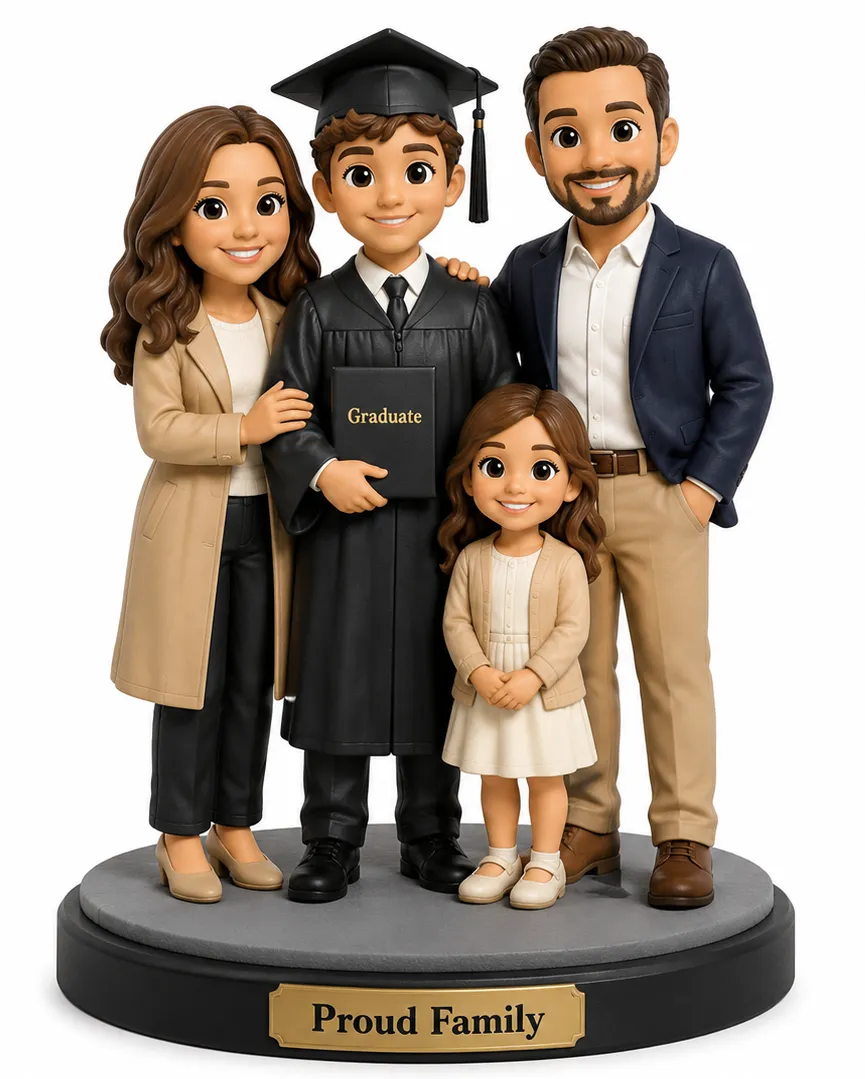
Yes — everyone does not need to be in the same photograph
A family may want Mom, Dad, the children, and grandparents together even though no recent photograph includes everyone. Four university friends may now live in different cities. A wedding gift may need to include a relative who could not attend the celebration.
In situations like these, separate photographs can be used as references for one custom group composition. The photographs show what each person looks like; your notes explain how they should stand together in the finished keepsake.
Heartfelt Creations’ personalised group figurine is designed to accept either one group photograph or separate photographs of each person.
Think of the order as a visual brief, not a photo collage
The goal is not to cut several photographs together. The goal is to understand each person well enough to design one balanced three-dimensional scene. That requires two kinds of information: references for the individuals and instructions for the group.
Good references answer “What does each person look like?” A good arrangement brief answers “How should these people appear together?” Keeping those two questions separate makes the order much clearer.
What photos to provide for each person
Start with one clear, front-facing face photograph per person. Natural light, a neutral expression, and an unobstructed view of the face are more useful than dramatic lighting or a distant event photo. Add a side view when the hairstyle, facial hair, or profile matters.
A second photograph can show the intended outfit, body shape, shoes, tattoo, glasses, jewellery, or accessory. It is fine if the face photo and clothing photo come from different occasions—just state which detail should be taken from each image.
- Label files or notes with the person’s name: “Ayesha face”, “Ayesha dress”, “Dad side view”.
- Use full-resolution originals where possible.
- Avoid filters that change skin texture, facial proportions, or colour.
- Include a recent image if the person’s hair, beard, or glasses have changed.
- Say which image is the most accurate when references disagree.
Explain height and scale without overcomplicating it
Separate photographs rarely show reliable height differences. A simple comparison is enough: “Dad is tallest; Mom is about 10 cm shorter; the twins are the same height.” You can provide actual heights if you know them, but relative order is often the most useful information.
For children, include their current age and explain whether the finished piece should reflect them now or at the time of a particular memory. This prevents an old photograph from being mistaken for the intended age.
Choose clothing that makes the group feel connected
The people do not need to have worn their final outfits at the same time. You might place everyone in smart-casual clothing, recreate a wedding colour palette, dress a graduate in academic robes beside their parents, or give university friends coordinated team shirts.
Be specific about which person wears which outfit. If colour accuracy matters, name the colour and add a clear reference. Keep patterns and accessories selective so the composition does not become visually crowded.
Describe the pose and who stands next to whom
Write the final order from left to right. Then name the focal person, any seated person, and any meaningful gesture. A short instruction such as “left to right: Mom, graduate, Dad; parents slightly turned towards the graduate” gives the design a useful structure.
If you are unsure, choose a calm, balanced arrangement. A simple shoulder-to-shoulder group is often clearer at figurine scale than a complicated action pose.
- Left-to-right order
- Who should stand in the centre
- Who is taller or shorter
- Any arm, hand, or seated pose that matters
- Props that belong to a specific person
- Whether a pet should be included
Use the base to explain why this group belongs together
A shared base turns several individual people into one keepsake. The wording can name the family, friendship, place, year, or milestone that connects them. Keep it short and check every name and date before ordering.
- The Jacobs Family
- Together, Always
- Class of 2026
- Cape Town Girls’ Trip
- Friends Across the Miles
A practical upload checklist
Before ordering, collect the references in one place and write one concise master note. The product page accepts a required custom photo and an optional custom note; use the clearest primary image for the upload and make the remaining requirements unmistakable in your brief. If you have more references than the order form can comfortably convey, contact Heartfelt Creations about the product before placing the order.
- One labelled face reference for every person
- Extra profile or hair reference where needed
- Clothing and accessory instructions per person
- Relative heights or tallest-to-shortest order
- Final left-to-right arrangement
- Exact base wording, spelling, and date
- A note identifying the most important details
When one group photograph is available
If you do have a suitable group image, use it as the main composition reference and add separate close-ups only for faces or details that are unclear. The guide to turning a group photo into a custom figurine explains the complete journey from identifying the people to 3D printing.
Family buyers can also use the custom family figurine guide for family-specific ideas, while graduates can explore personalised graduation group figurines.
Frequently asked questions
Can you combine different people from separate photos into one figurine?
Yes. Provide a clear, labelled reference for each person and explain the intended height, clothing, pose, left-to-right order, and shared base wording.
Does every reference photo need to show the full body?
No. A clear front-facing face image is the priority. Separate full-body or clothing references can show the outfit, body shape, shoes, pose, and accessories.
How do I explain height differences?
List the group from tallest to shortest or provide simple comparisons. Actual heights are helpful when known but are not the only way to explain relative scale.
What if the people are wearing different clothes in every photo?
Choose the final outfit for each person, label the clothing references, and state clearly which face and outfit images should be combined for that person.